





Online Quran Classes for Beginners: Step-by-Step Guide
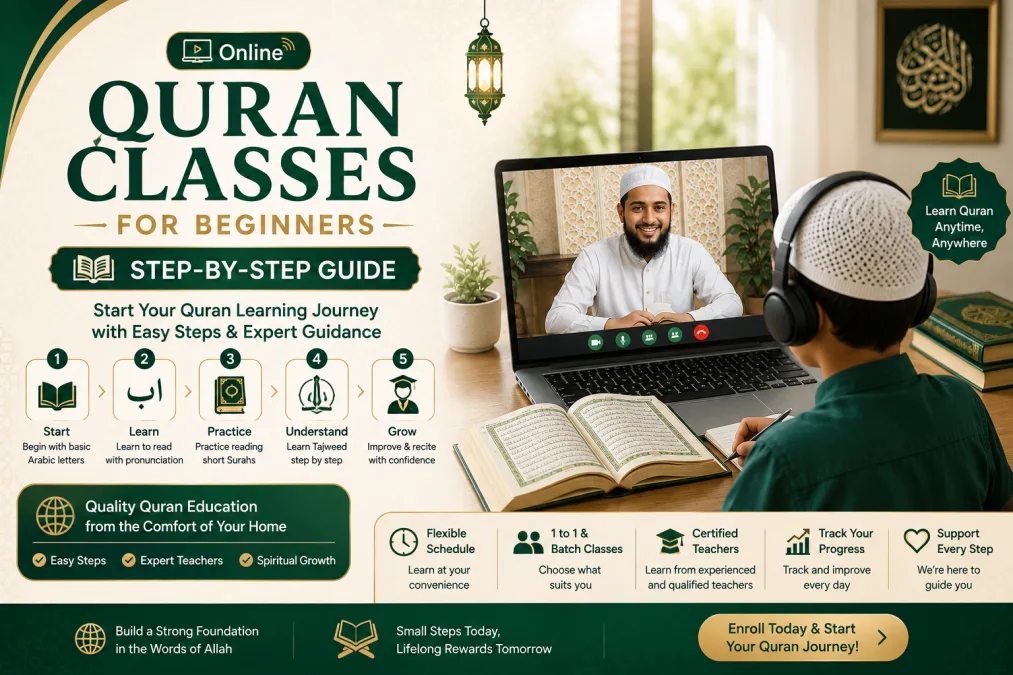
Article Overview
~ 5 min readThis guide walks through the entire journey step by step, so there's no confusion about what happens when, and what to expect at each stage.
Online Quran Classes for Beginners: Step-by-Step Guide
Deciding to start online Quran classes is one thing — actually knowing the process, from your very first search to your child's (or your own) first real lesson, is another. This guide walks through the entire journey step by step, so there's no confusion about what happens when, and what to expect at each stage.
Step 1: Identify the Right Starting Point
Before enrolling anywhere, take a moment to honestly assess where you or your child currently stands:
- No Arabic letter knowledge at all — true beginner
- Some letter recognition, but slow or inconsistent reading
- Can read but with pronunciation issues needing correction
- An adult who never learned as a child
This self-assessment isn't about getting it perfectly right — a good teacher will confirm and adjust during the trial class — but it helps you choose the right course category from the start.
Step 2: Choose Between Children's and Adult Tracks
Courses are typically separated by age group because teaching pace, language, and methods differ significantly:
- Children (ages 5–15): Nazera Quran, Hifz Quran, Tajweed, or Smart Maktab Learning, depending on age and goal
- Adults: A dedicated Adult Quran Learning course, paced for grown learners balancing work and family responsibilities
Step 3: Book a Free Trial Class
This is the most important step before committing to anything. A trial class lets you:
- See the teacher's communication style and patience firsthand
- Confirm the teacher can explain things clearly in Bangla (and English, if needed)
- Assess whether your child feels comfortable with this particular teacher
- Ask direct questions about curriculum, scheduling, and progress tracking
Never skip this step, regardless of how convincing a website or advertisement looks.
Step 4: Get Matched with a Certified Teacher
Based on the trial class and your stated goals, you'll be matched with a certified Hafez or Qari teacher suited to the student's age and level. If the fit doesn't feel right after the trial, a good institute will offer to match you with someone else rather than pressuring you to continue.
Step 5: Set a Consistent Class Schedule
Classes are arranged around your time zone and routine — whether that's weekday evenings after school, weekend sessions, or a schedule that works around work hours for adult learners. Consistency matters more than frequency at this stage; a fixed weekly time, even just once or twice a week, builds far better habits than an irregular schedule.
Step 6: Begin the Structured Curriculum
Once enrolled, lessons follow a clear progression rather than random topics:
- Arabic letter recognition and Makhraj (for true beginners)
- Basic word and sentence reading
- Introduction to fundamental Tajweed rules
- Progression into full Quran reading (Nazera)
- For those continuing further — transition into Hifz (memorization), once reading is fluent and accurate
Step 7: Practice Between Classes (Mashq)
Each class typically ends with a specific practice assignment — repeating a passage, reviewing a rule, or preparing new material. Even 10–15 minutes of daily practice between sessions makes a significant difference in how quickly progress happens.
Step 8: Track Progress Regularly
A good teacher or institute should give you visibility into progress — what's been covered, what's improved, and what still needs work — rather than leaving parents guessing about whether classes are actually effective.
What to Expect in the First Few Weeks
- The first 1–2 classes often focus on getting comfortable with the format and assessing the true starting level
- Progress may feel slow initially, especially for true beginners working on Makhraj — this is completely normal
- By weeks 3–4, most students settle into a rhythm and begin showing noticeable improvement in confidence, even if full fluency is still far off
Frequently Asked Questions
How soon after the trial class can regular classes start? Typically within a few days, once a schedule is agreed upon and a teacher is confirmed — there's usually no long waiting period.
What if my child needs a completely different pace than what's initially suggested? A good teacher adjusts continuously based on how the student is actually progressing, not a fixed script — this should become clear even within the first few classes.
Is there a minimum commitment period? This varies by institute — it's worth asking directly during enrollment so expectations are clear from the start.
Can I switch from a children's track to an adult track later, or vice versa? Course tracks are generally determined by age and goals from the start, but it's worth discussing directly with your institute if circumstances change.
What if I want to pause classes temporarily — is that possible? Most institutes can accommodate temporary pauses for travel, exams, or other family circumstances — communicate this directly through your contact channel (such as WhatsApp) as early as possible.
Begin Your Step-by-Step Journey Today
The clearest way to start is with a real trial class, not just reading about the process. Learn Al Quran Online BD offers certified Hafez and Qari teachers, structured beginner tracks for both children and adults, and a free trial class to help you take that first step with confidence.
📞 Book a free trial class: learnalquranonlinebd.com/free-trial-class 💬 WhatsApp: +880 1410-745663