
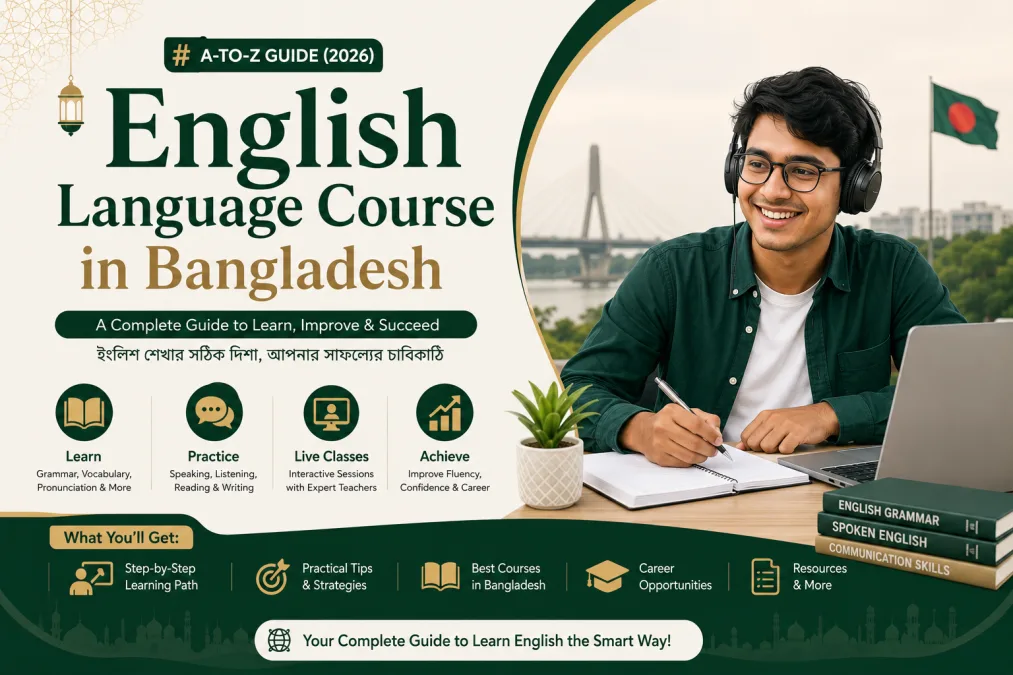
English Language Course in Bangladesh: A-to-Z Guide (2026)
প্রবন্ধের সারসংক্ষেপ
~ 4 মিনিট পড়ার সময়If you've been searching for one and feel a bit lost in the terminology, this guide breaks down the full landscape so you can figure out exactly what kind of course actually matches what you need.
English Language Course in Bangladesh: A-to-Z Guide (2026)
"English language course" is a broad term — it can mean anything from a school-level grammar class to a spoken English program to IELTS preparation. If you've been searching for one and feel a bit lost in the terminology, this guide breaks down the full landscape so you can figure out exactly what kind of course actually matches what you need.
English Language Course vs. Spoken English Course: What's the Difference?
These terms are often used interchangeably in Bangladesh, but they're not always the same thing:
- English Language Course — Usually broader, covering reading, writing, grammar, and sometimes speaking and listening together. Common in academic settings.
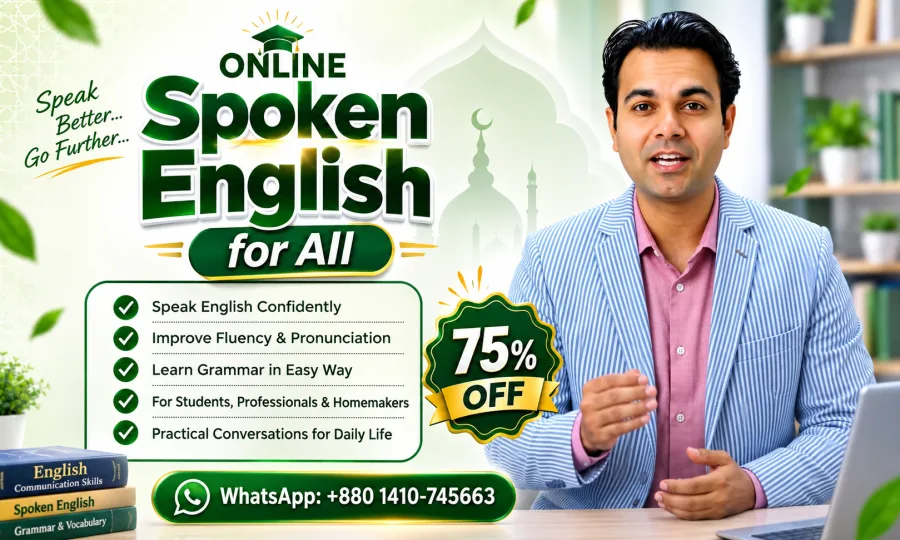
- Spoken English Course — Specifically focused on speaking confidence, pronunciation, and real-time conversation skills.
- IELTS/TOEFL Preparation Course — Exam-focused, targeting all four skills (reading, writing, listening, speaking) in the specific format required by the test.
- Business/Professional English Course — Focused on workplace communication — emails, presentations, meetings.
Knowing which category you actually need saves you from enrolling in a course that teaches the wrong skill set for your goal.
The Four Core Skills — And Why Most Courses Miss One
A complete English language course should address:
- Reading — Understanding written English (articles, documents, exam passages)
- Writing — Composing clear, grammatically correct English (essays, emails, reports)
- Listening — Understanding spoken English in different accents and speeds
- Speaking — Producing spoken English confidently and correctly
Many "English course" programs in Bangladesh focus heavily on reading and writing (often shaped by exam-oriented school teaching) while giving little attention to speaking and listening — which is exactly why so many learners who did well in school English still struggle to hold a confident conversation.
How to Choose Based on Your Goal
| Your Goal | Best Course Type |
|---|---|
| Confident daily conversation | Spoken English course (live, speaking-focused) |
| University admission or academic requirement | General English language course (all 4 skills) |
| Studying or working abroad | IELTS/TOEFL preparation course |
| Career growth / workplace communication | Business English course |
| Building overall foundation from scratch | Beginner-level general English course |
What to Check Before Enrolling in Any English Language Course
- Does it match your specific goal, or is it a generic, one-size-fits-all program?
- Is there a spoken/speaking component, or is it purely grammar and writing focused?
- What's the class format — live sessions, recorded videos, or a mix?
- What's the batch size, and how much individual attention will you realistically get?
- Is a free trial or demo class available so you can judge the teaching style firsthand?
A Realistic Path for Most Learners
If your main goal is genuinely being able to speak English confidently — for interviews, work, or daily life — a general English language course alone often isn't enough, since many focus more on reading and writing. In that case, pairing (or choosing) a course with a strong spoken English component tends to get you to your actual goal faster.
Frequently Asked Questions
Is an English language course the same as a spoken English course?
Not always. English language courses often cover all four skills broadly, while spoken English courses focus specifically on speaking confidence and conversation practice.
Which type of course is best for someone who did well in school English but still can't speak confidently?
A speaking-focused spoken English course, since the gap is usually in speaking practice and real-time feedback — not grammar knowledge.
Do I need to complete a general English course before starting a spoken English course?
Not necessarily. Many spoken English courses start with a basic assessment and build speaking skills alongside grammar as needed, without requiring a separate prerequisite course.
How do I know if a course covers enough speaking practice?
Ask directly about the ratio of live speaking time versus lecture-style content, or better yet, join a free trial class to see it firsthand.
Is it worth taking a general English course if I only need it for interviews?
Probably not the most efficient choice — a spoken English course focused on interview scenarios and conversational confidence would likely serve that specific goal better.
Find the Right Fit
Not sure which type of course actually matches your goal? The easiest way to find out is to join a free trial class and see what a speaking-focused approach looks like in practice. Visit our website to book your free trial today.