





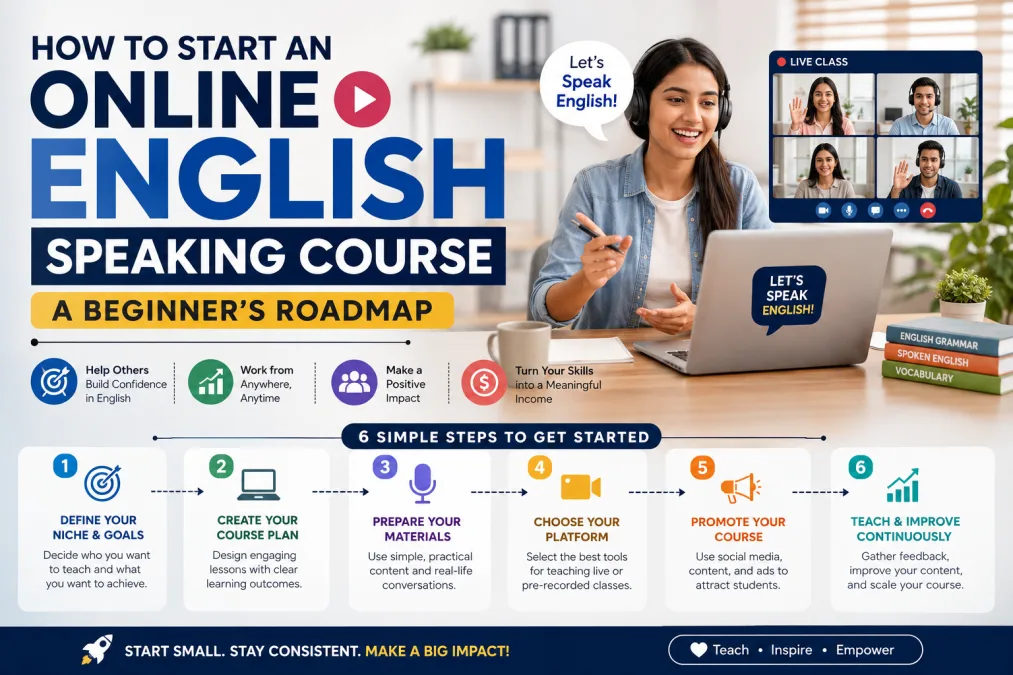
How to Start an Online English Speaking Course: A Beginner's Roadmap
প্রবন্ধের সারসংক্ষেপ
~ 5 মিনিট পড়ার সময়This roadmap breaks the process into clear, manageable steps so you can go from "I want to learn" to "I'm actually making progress" without getting stuck at the starting line.
How to Start an Online English Speaking Course: A Beginner's Roadmap
Deciding to improve your spoken English is the easy part — actually starting can feel overwhelming with so many options, conflicting advice, and uncertainty about where to begin. This roadmap breaks the process into clear, manageable steps so you can go from "I want to learn" to "I'm actually making progress" without getting stuck at the starting line.
Step 1: Get Clear on Your "Why"
Before searching for a course, define your actual goal:
- Speaking confidently in job interviews
- Everyday conversation with friends, family, or colleagues
- Professional communication at work (meetings, presentations, emails)
- Preparing for study or work abroad
Your goal shapes everything that follows — the type of course, the content focus, and even how you measure progress.
Step 2: Honestly Assess Your Starting Point
Be realistic about where you're starting from:
- Beginner — Limited vocabulary, uncomfortable forming full sentences
- Intermediate — Understand well, but hesitate or make frequent mistakes when speaking
- Advanced — Can hold conversations but want more fluency, confidence, or precision
There's no shame in any of these — the point is choosing a course pitched at the right level, so you're neither bored nor overwhelmed.
Step 3: Choose the Right Course Format
| If you... | Consider... |
|---|---|
| Learn well independently and want zero cost to start | Free YouTube resources + apps |
| Want structure but flexible timing | Recorded course with self-paced modules |
| Need real feedback and speaking practice | Live class course with an instructor |
| Want the best of both | Hybrid course (recorded concepts + live practice) |
Step 4: Try Before You Commit
Whatever course you're leaning toward, take a free trial or demo class first. This single step prevents the most common mistake: paying for a course, then realizing the format, pace, or teaching style doesn't work for you.
During the trial, pay attention to:
- How much you actually get to speak (not just listen)
- Whether the instructor corrects your mistakes clearly and kindly
- Whether the pace matches your level
- Whether the batch size feels right for getting individual attention
Step 5: Build a Simple Daily Routine
Once you've chosen a course, consistency matters more than intensity:
- Set a fixed time each day, even if it's just 15–20 minutes
- Speak out loud during practice — don't just read or listen silently
- Review your mistakes weekly instead of letting them pile up unnoticed
- Track small wins (a new phrase used correctly, a conversation that felt easier)
Step 6: Practice in Real Situations, Not Just Class
Class time alone often isn't enough. Look for chances to use English outside of lessons:
- Order food or ask directions in English when possible
- Watch shows or videos in English with subtitles, then without
- Try short conversations with classmates, friends, or online language partners
Common Mistakes Beginners Make
- Waiting to "feel ready" before starting — confidence usually comes after you start speaking, not before
- Choosing a course based on price alone, without checking the teaching format
- Skipping the trial class and hoping for the best
- Focusing only on grammar rules while avoiding actual speaking practice
Frequently Asked Questions
How long does it take to see real improvement in spoken English?
It varies by starting level and consistency, but many learners notice a meaningful boost in confidence and fluency within a few weeks to a couple of months of regular practice.
Do I need to know perfect grammar before starting a spoken English course?
No — most spoken English courses are designed to build grammar and speaking skills together, so you don't need to master grammar first.
Is it better to start with a free resource or go straight to a paid course?
Either can work. Free resources are a low-risk way to build initial comfort, while a paid course with live feedback tends to speed up progress if you're ready to commit.
What if I'm too nervous to speak in front of others?
This is extremely common. A good course and instructor will create a low-pressure environment specifically designed to help you get past this — and it usually improves faster than expected once you start.
How do I know if a course is actually worth continuing after the trial?
If the trial class gave you real speaking practice, clear feedback, and felt comfortable rather than intimidating, that's a strong sign it's a good fit.
Take the First Step
The roadmap above works best once you actually start — and the easiest first step is a low-pressure trial class. Join a free trial class with us and take your first real step toward confident spoken English. Visit our website to book your free trial today.