



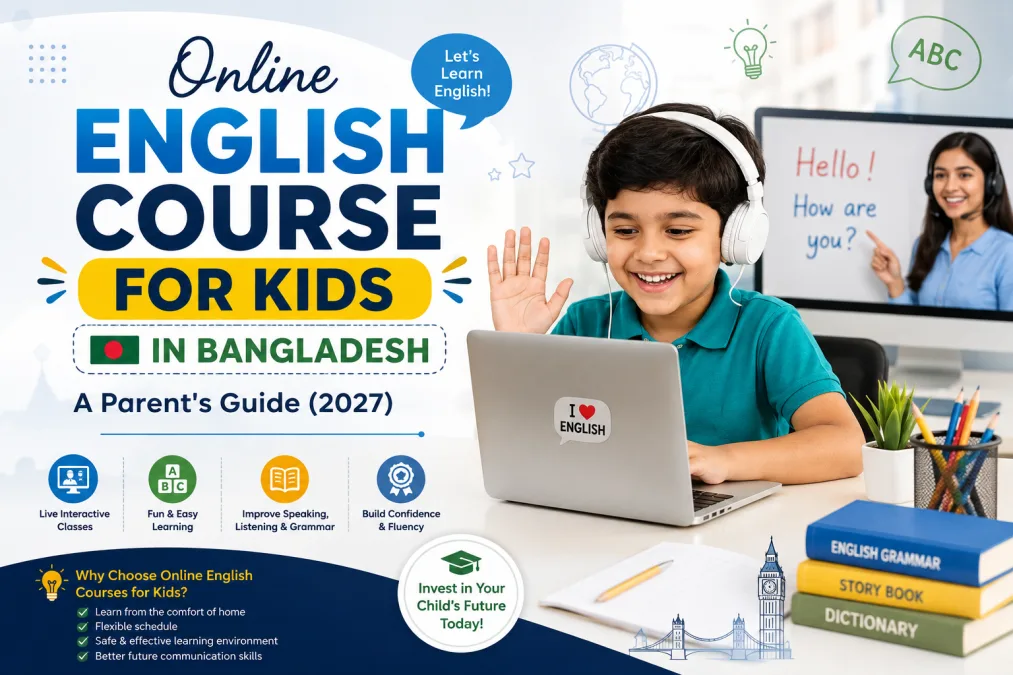
Online English Course for Kids in Bangladesh: A Parent's Guide (2027)
প্রবন্ধের সারসংক্ষেপ
~ 4 মিনিট পড়ার সময়Choosing a course for a child is different from choosing one for yourself: attention spans are shorter, motivation works differently, and safety matters more. This guide walks parents through what to actually look for.
Online English Course for Kids in Bangladesh: A Parent's Guide (2027)
More parents in Bangladesh are looking for online English courses for their children — whether to build a strong foundation early, support school performance, or prepare kids for future opportunities. But choosing a course for a child is different from choosing one for yourself: attention spans are shorter, motivation works differently, and safety matters more. This guide walks parents through what to actually look for.
Why Start English Early
Children generally pick up new languages faster than adults, especially when learning feels natural rather than forced. Starting early can help with:
- Building confidence in speaking without the self-consciousness that often develops later
- Strengthening school performance, since English is used across many subjects
- Developing a natural ear for pronunciation and listening comprehension
- Creating a habit of learning that carries into other subjects
What Makes an Online English Course Good for Kids (Not Just Effective for Adults)
A course designed for adults rarely works well for children as-is. Look for these child-specific features instead:
- Shorter class durations — Young children typically focus best in 30–45 minute sessions, not long lectures.
- Interactive, game-based learning — Songs, stories, and activities keep engagement high in a way plain lecture-style teaching can't.
- Age-appropriate content — Vocabulary and topics suited to the child's age group, not generic adult material.
- Patient, child-experienced instructors — Teaching kids requires different skills than teaching adults, including patience and the ability to keep them engaged.
- Parental visibility — The ability for parents to see progress, attend a session, or get feedback on what's being taught.
- Safe online environment — Secure platforms with appropriate supervision, especially important for younger children.
Choosing the Right Course by Age Group
| Age Group | What to Prioritize |
|---|---|
| 5–8 years | Playful, song- and story-based learning; very short sessions; strong parental involvement |
| 9–12 years | Structured lessons with some interactive speaking practice; building reading and basic conversation together |
| 13+ years | More conversation-focused classes; exam or school-support oriented content if needed |
Questions Parents Should Ask Before Enrolling
- How long are the class sessions, and how many students are in each batch?
- Is the teaching style interactive, or mostly lecture-based?
- Can I sit in on a free trial or demo class before enrolling?
- What safety and supervision measures are in place for online sessions?
- How is my child's progress tracked and communicated to me?
Common Mistakes Parents Make
- Enrolling a young child in a course designed for adult learners
- Choosing based on price without checking if the teaching style suits the child's age
- Skipping the trial class and hoping the course "works out"
- Not checking batch size, leading to a child getting very little individual attention
Frequently Asked Questions
What's the right age to start an online English course for a child?
Many children benefit from starting around age 5–6, once they're comfortable with basic listening and following simple instructions, though it varies by child.
Are online English courses safe for young children?
Reputable courses use supervised, structured platforms with age-appropriate content and instructors experienced in teaching kids. It's worth confirming safety measures directly with any provider before enrolling.
How long should a child's English class be?
Generally 30–45 minutes for younger children, since attention spans are shorter — longer sessions often reduce engagement rather than improve learning.
Should parents attend the classes with young children?
For younger kids, especially in the first few sessions, parental presence can help with comfort and focus. Many courses allow or even encourage this.
How can I tell if my child is actually improving?
Look for courses that provide regular progress updates, and notice practical signs — like your child attempting more English at home or showing more confidence speaking.
See a Class in Action
The best way to know if a course fits your child is to see a class firsthand. Join a free trial class with us and watch how interactive, age-appropriate teaching keeps kids engaged while building real speaking confidence. Visit our website to book your free trial today.